
From “Everyone” to “The One”: Defining Your Profit-Driving Customer Avatar
“Everyone is my customer.” At first, it sounds inclusive—maybe even optimistic. But it’s one of the fastest ways to burn time, money, and momentum.
When founders try to speak to everyone, their message dissolves into noise. Nothing feels specific, nothing feels personal, and nothing converts the way it should.
This isn’t a copy problem.
It’s a clarity problem.
Why Broad Messaging Quietly Kills Growth
The human brain is hardwired to tune out what feels irrelevant.
MIT neuroscience research shows people subconsciously filter out messages that don’t directly reflect their situation or identity.
When your marketing feels generic, your audience doesn’t analyze or debate it.
They simply scroll past—without a second thought.
Harvard Business Review confirms customers respond more strongly to brands that demonstrate a deep understanding of their specific context.
Broad targeting doesn’t make your brand safer. It makes your brand invisible.
The Myth of “More Reach = More Revenue”
Most small businesses don’t need more exposure—they need greater precision.
They need better precision.
McKinsey research shows that companies using advanced customer segmentation outperform competitors in customer acquisition and retention.
Precision isn’t limiting—it’s liberating. When you know exactly who you’re speaking to, messaging becomes easier—and far more effective.
The Shift: From Demographics to Deep Empathy
A true customer avatar isn’t just:
Age
Gender
Job title
These are simply descriptors.
What truly drives decisions is emotion, motivation, and pain.
Nielsen Norman Group research shows people decide based on perceived relevance and emotional resonance—not on logical completeness.
This is where most avatars fall short.
They describe the customer, but rarely understand them.
How to Identify and Define “The One” Customer Who Drives Profit
This isn’t about exclusion.
It’s about strategic focus.
Step 1: Give Your Ideal Customer a Name
Give your ideal customer:
A name
A role
A real-life context
Psychological studies show that naming a persona increases empathy and improves decision-making clarity.
Step 2: Uncover Their Internal Struggle
Ask yourself:
What keeps them awake at night?
What do they fear admitting publicly?
What outcome would make them feel relieved?
The Journal of Consumer Research finds that emotional relevance dramatically boosts message recall and trust.
Step 3: Pinpoint the Moment of Decision
Your ideal customer isn’t always buying.
They are deciding—often long before they buy.
What moment pushes them to seek help? What failure or frustration triggers action?
This insight is the birthplace of conversion.
Step 4: Clarify What They Want to Avoid
Often, what repels your ideal customer is more powerful than what attracts them.
Behavioral economics research confirms people are more motivated to avoid pain than to pursue pleasure.
Your messaging should acknowledge both.
What Happens When You Speak Directly to “The One”
When your messaging becomes precise:
Content practically writes itself
Ad spend becomes far more efficient
Sales conversations become shorter and more focused
Trust builds rapidly
According to HubSpot, personalized messaging can improve conversion rates by up to 202%.
This isn’t magic.
It’s simply alignment.
The Identity Shift That Changes Everything
When founders stop marketing to everyone, a profound shift happens.
They become truly confident.
Confident in their voice, their pricing, and who they are not for.
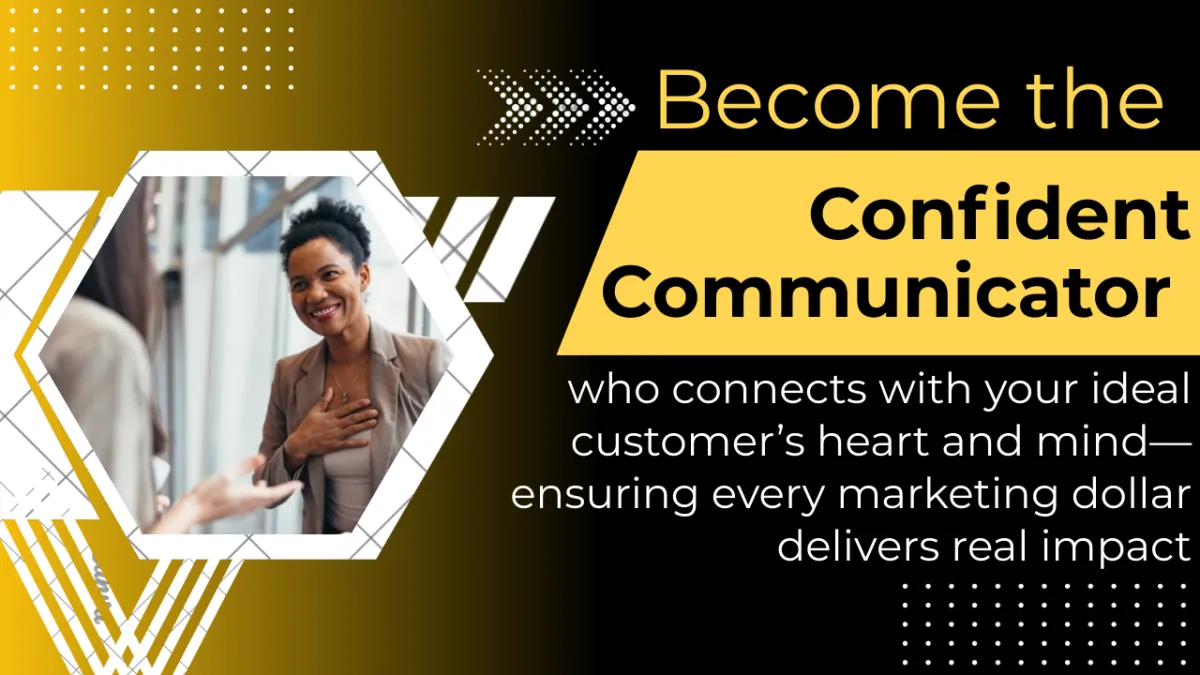
You become The Confident Communicator—a leader who speaks directly to the heart and mind of the right customer—making every marketing dollar count.
And the right people finally listen.
♻️ Your insights matter! Share this publication to empower your network to move beyond surface-level marketing—and embrace systems that create lasting impact.
𝐕𝐢𝐬𝐢𝐭 𝐨𝐮𝐫 𝐰𝐞𝐛𝐬𝐢𝐭𝐞 👉 https://newdawntransformation.com/ for actionable, system-focused insights and proven strategies you can use to transform your marketing—starting today!
#BusinessSystems #ThoughtLeadership

